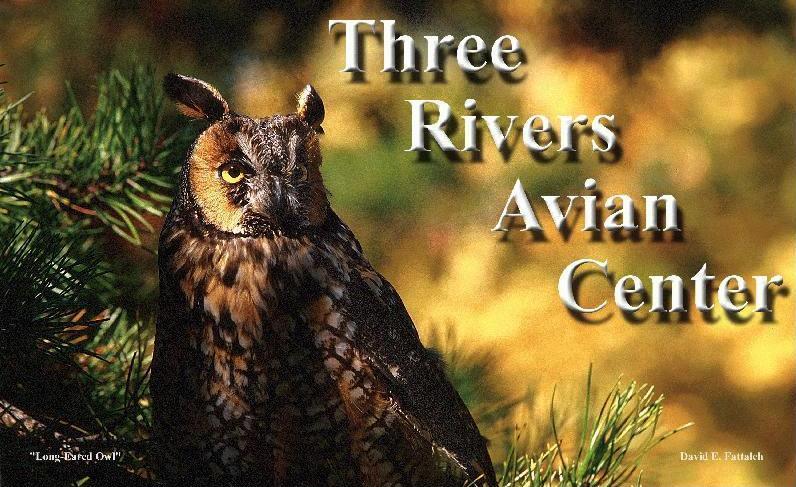
Our mission is to conserve native wild birds and to educate and involve the public in ecosystem stewardship through educational outreach, wild bird rehabilitation, restoration, and research projects.
Three Rivers Avian Center (TRAC) is a nonprofit 501(c)3 organization focused on wild bird conservation, ecosystem education, and community involvement. Established in 1990, TRAC features a 110-acre facility situated in the scenic New River Gorge area of southern West Virginia, between Sandstone and Hinton in Summers County. Bordered partially by the New River Gorge National Park & Preserve, TRAC’s location provides an ideal setting for bird watching, wildlife viewing, and connecting with nature. We offer programs and resources on wild bird preservation, habitat restoration, and environmental stewardship for all ages. Visit our avian conservation center in West Virginia today.
Become a Member!
Receive the Raptor Chapter Newsletter Directly and Support Our Financial Efforts.
Follow Us On Facebook
UPDATE ON THE WOOD STORK FROM GREENBRIER COUNTY: TRAC Executive Director Wendy Perrone and Education Director Ron Perrone went to watch the Wood Stork in Lilly Park WV. We had hoped that it was fine, but over time watching it we realized that was not the case. 1st off, it was eating dog excrement for food then throwing it back up (good, it wasn't on the menu) We decided that the best course of action was to capture it, check it's keel (a good indication of body weight and flight ability) and we had 6 volunteers there who helped form a human circle that helped us capture the bird. A quick check showed the bird was starving which the coughed up dog excrement reinforced. Lice were also present in large numbers. We brought it back to TRAC after buying 4 dozen shiners at WaterDawg in Hinton. Exam showed no lead issues. It was a bit stressed by the capture but calmed down and ate 2 dozen shiners in an hour and a half. No injuries are apparent that could cause trouble for it. The plan is to feed it and get its weight back to normal then send it south to join a flock. Right now it is too weak to fly. It is in Room 3 of the Flight Barn, and has been really happy for the shiners! It cost $35 for 4 dozen shiners, so this is going to get expensive quickly. We could use financial help on this one!! If you can help us, please click on the "donate now" button at the top of our website page (tracwv.org) and please include your address and that it is for the Wood Stork. We would appreciate any and all financial help on this. Thank you to Larry Ayers for the photo.
We have been notified that there is a wood stork in the marsh area in Lily Park outside Rainelle. It was first spotted by Lisa Ayers 5 days ago and has been happily scavenging in the swampy area these last days. Nothing seems to be wrong with it, and judging by it's eye color and beak we think it is a jeuvie. It is eating and doing fine, so we are relying on the Ayers family for monitoring updates. Wood storks have only been documented in West Virginia 5 times. What a cool visitor! Thank you to Larry Ayers for the video.
(This is long but important.) There are a new series of rodenticides on the market that are wrecking havoc in wild predators, cats and dogs. In an article in Birdwatchers Digest July/August issue, Dr Robert Giddings called these new rodenticides “the new DDT”. We are talking here about Second Generation Anticoagulant Rodenticides, commonly called “SGARs” for short. The First Generation Anticoagulant Rodenticides (“FGARs” usually associated with D-Con) used the slow acting ingredient Warfarin. Warfarin took several doses to become lethally toxic to either the rodent or to it’s predator, but it worked by thinning out the blood so the ingestor basically blead to death internally. It worked by shutting down the body’s ability to process vitamin K, so the antidote was to treat the patient with injectable vitamin K. The first generation rodenticides were developed in the 1940s and became widely used. Wildlife rehabilitators and veterinarians learned to keep a stock of injectable vitamin K on the shelf. If there was a low level of repeated exposure to poisoned bait, rodents and/or the predators that preyed on them developed resistance to it. This made the poison not reliable and became less popular. The new SGARs are able to kill with 1 ingestion, but it can take up to 2 - 5 days to take effect. The rodent or other grain eating animal (birds! and more) wanders away from the bait source (allowing others to think the bait is safe) but is more and more dehabilitated as the internal bleeding begins, thus making them easy prey for other predators and scavengers. I mention scavengers here because the SGARs do not break down in the body as it decays, and thus are transmitted in full dose into whatever animal or bird is consuming the poisoned rodent, etc. There is no antidote. The only thing that can be done is to medically induce vomiting if the issue has been discovered quickly enough. Often with wildlife there is too long a delay. Non-target species that come in contact with the poison include (but not limited to) birds of all kinds including bald eagles and other raptors, possums, skunks, bear, raccoons, bobcats, skinks, deer, carrion beetles, snakes, some lizards, frogs, dogs, cats and pigs. The SGARs we are talking about are bridifacoum, bromdiolone, difenacoum, and difethialone. They are exclusively only used by licenced pest control companies and are usually seen in a black, tamper-proof boxes. Please note: the placement of poisoned bait outdoors is federally illegal. If you see these boxes outdoors, contact the property owner or the company immediately. The symptoms of SGARs poisoning include lethargy, bleeding gums and cuts that take too long to heal. What can you do instead of using poisoned bait? We strongly advocate for not using poisons ANYWHERE, including on your home, lawn or those purple insect-killing bug zappers (they primarily kill pollinators). If you have a rodent problem, use baited snap traps, or electric traps. NEVER use glue traps - they are inhumane in the extreme. Eliminate the source of supply if you can: use metal trash cans to enclose grain or seeds or suet, for example. Close their access! See if you can find a hole (or many) where they can squeeze in. If they can get their head through, the rest of the body can follow. We advocate for using rough steel wool stuffed into the hole with spray insulation foam to lock it into place. They hate to get the steel wool into their teeth! Poisons are non-specific in their ability to kill. Please help us spread the word. New Hampshire Audubon Society has an excellent, easy to print brochure on the issue and lots of information on their website: https://nhaudubon.org/policy/rodenticides/ New Hampshire Audubon
Learn With Us
Many Thanks To Our Sponsors!
Donations keep Three Rivers Avian Center thriving so we can continue our mission to conserve West Virginia's avian wildlife populations. They are fully tax-deductible and can be made in your or your loved one's name, your group's, or your company's. All sponsors are listed on the website below and in our monthly newsletter. TRAC accepts credit and debit card donations, as well as automatic monthly donations, via PayPal.
Consider becoming a member today!
Together, we can keep wild birds flying free.